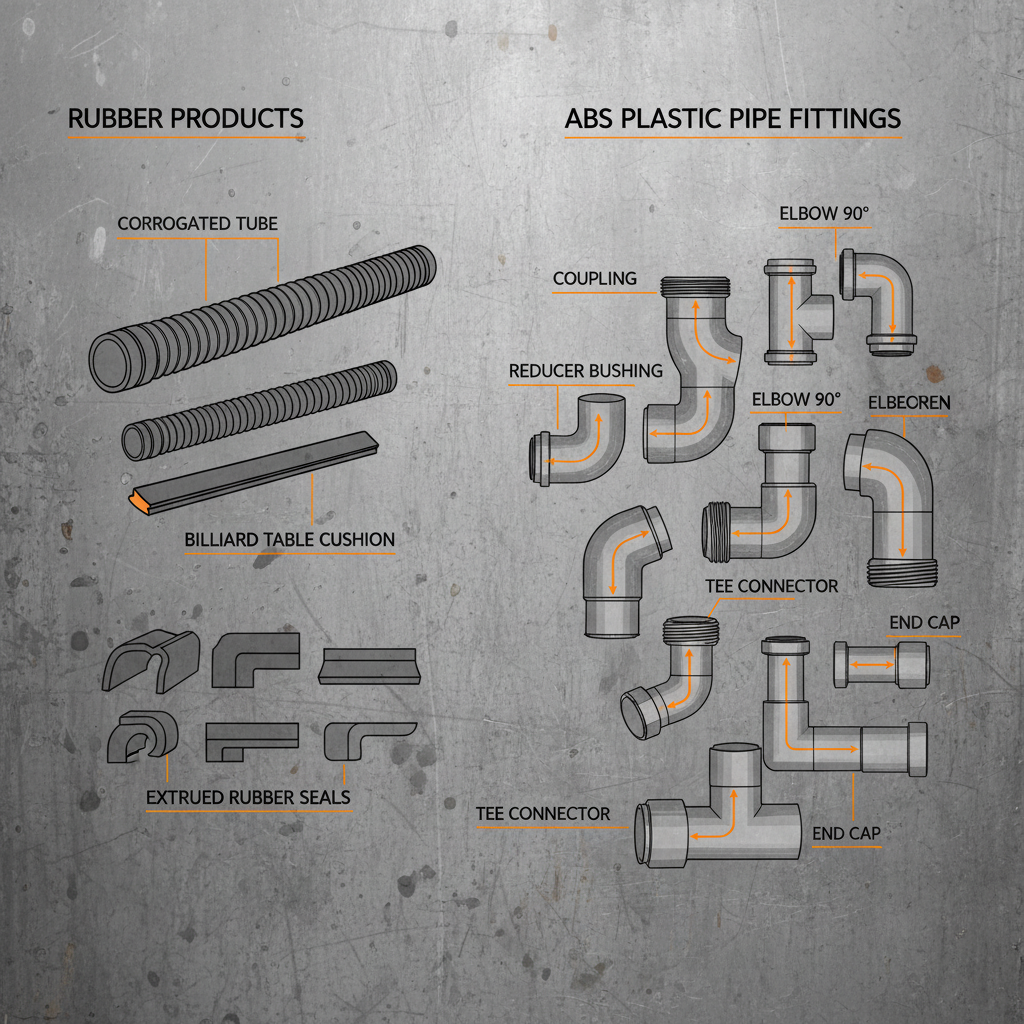
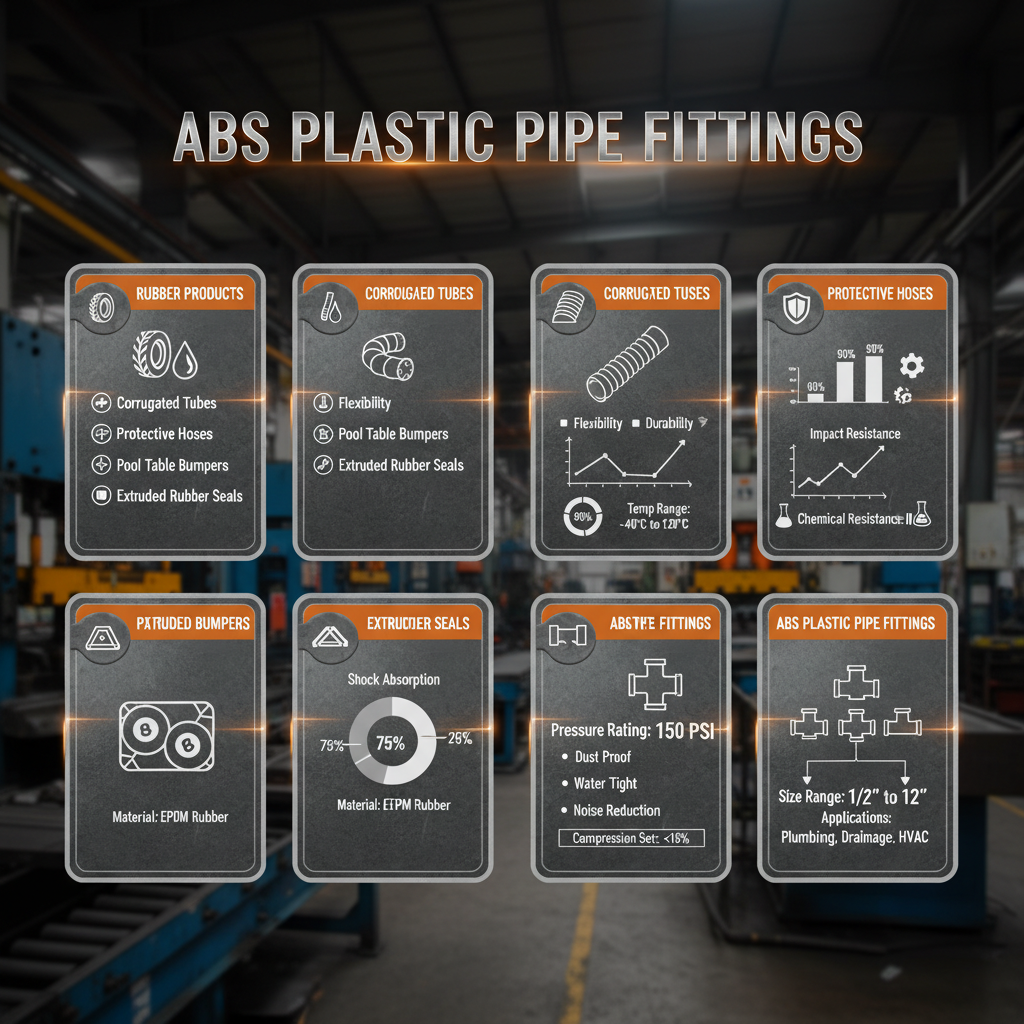
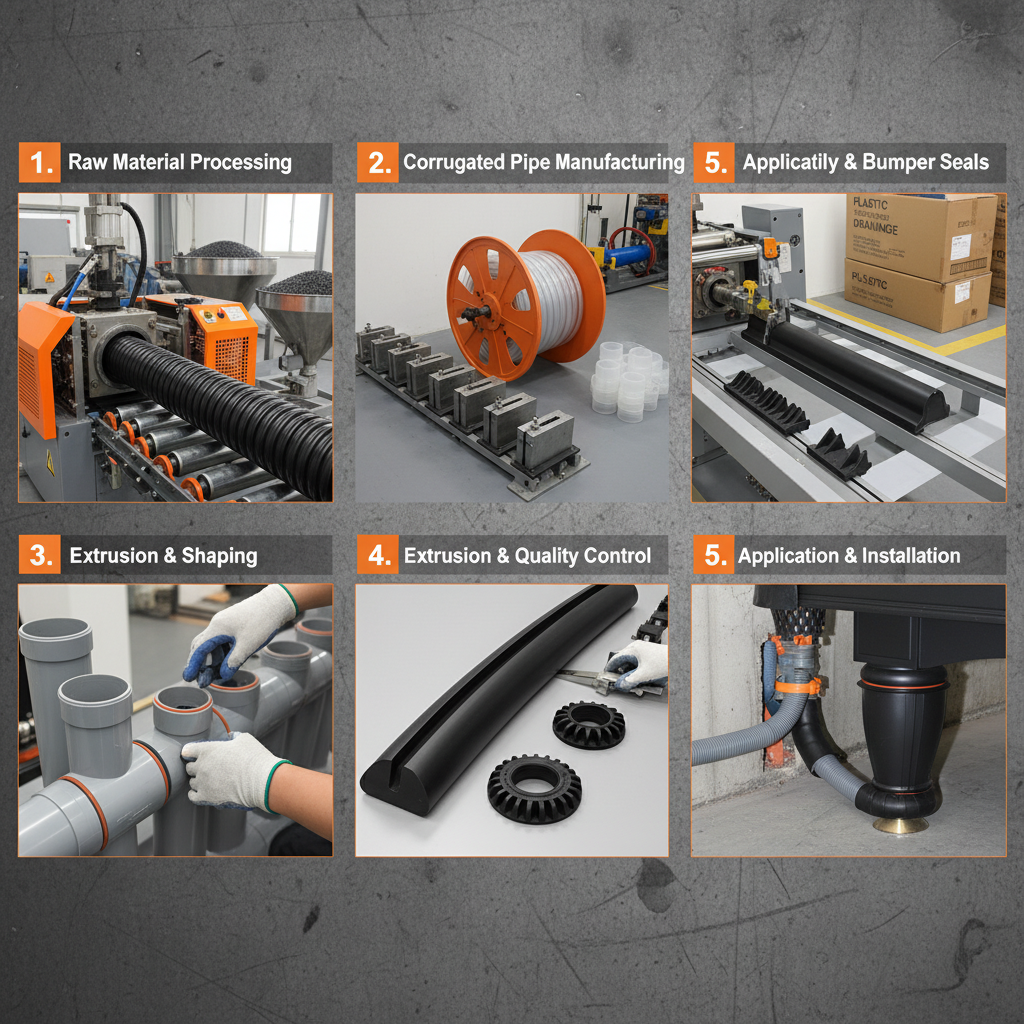
Look, I’ve spent the last fifteen years elbows deep in concrete, dust, and frankly, a lot of frustration trying to find reliable piping solutions. It's a tough world out here on the construction site, things have to hold up, and they have to hold up to a lot. We're talking about everything from potable water to chemical waste, and the cost of failure – in both money and safety – is astronomical. That's where abs plastic pipe fittings come in. They've become a real workhorse for a lot of projects, and for good reason. They bridge a gap between the rigidity of metal and the cost-effectiveness of PVC.
We’re constantly battling corrosion, impact damage, and temperature fluctuations. Traditional materials often require extensive maintenance, or just plain fail under stress. Finding something that’s lightweight, easy to install, and can handle the abuse a construction site dishes out is a constant struggle. That’s why the shift towards materials like abs plastic pipe fittings is a big deal. It's not just about saving a few bucks upfront; it’s about long-term durability and minimizing downtime.
Honestly, I’ve seen too many projects delayed and budgets blown because of subpar piping. Guys underestimate the stress these systems endure. You’ve got heavy machinery operating nearby, ground settling, constant vibration…it all adds up. Abs plastic pipe fittings offer a level of resilience that a lot of other options just can’t match. They're becoming more and more of a standard spec, and rightly so.
The Critical Role of abs plastic pipe fittings in Modern Infrastructure
Let’s face it, infrastructure is the backbone of everything. And increasingly, that infrastructure relies on durable, reliable piping systems. abs plastic pipe fittings have moved beyond just a ‘budget option’ and are now integral to everything from residential plumbing to large-scale industrial projects. The sheer volume of abs plastic pipe fittings manufactured and installed globally – estimates put it in the billions of units annually – shows how seriously the industry takes this material.
The UN estimates that global investment in infrastructure will need to reach $5.7 trillion annually by 2030 just to meet current needs. That kind of investment demands materials that offer longevity and reduced lifecycle costs, and that’s where abs plastic pipe fittings really shine. They aren’t a magic bullet, but they’re a significant step in the right direction for creating more resilient and sustainable infrastructure networks.
Understanding abs plastic pipe fittings: A Deep Dive
At its core, abs plastic pipe fittings are manufactured from acrylonitrile butadiene styrene – a thermoplastic polymer known for its impact resistance, toughness, and rigidity. It’s not a single material, but rather a blend specifically formulated to provide a sweet spot between strength, flexibility, and cost. This makes it ideal for a wide range of applications where traditional metal piping might be overkill or too prone to corrosion.
You'll find abs plastic pipe fittings used in everything from drain, waste, and vent (DWV) systems in homes to more demanding industrial applications. It’s a direct response to the need for corrosion-resistant materials, especially in environments where chemicals or harsh weather conditions are prevalent. It allows for faster installation because it’s lightweight and easy to cut and join, which translates to reduced labor costs.
Compared to PVC, abs generally offers better impact resistance, especially at lower temperatures. While PVC is often cheaper upfront, abs often wins out in applications where the system is subject to physical stress or extreme temperature swings. It's about choosing the right tool for the job, and abs plastic pipe fittings frequently prove to be that tool.
Core Characteristics of High-Performance abs plastic pipe fittings
Durability is king. That’s the first thing I look for in any piping system. abs plastic pipe fittings excel here. They can withstand significant impact without cracking or breaking, and they resist a wide range of chemicals, making them suitable for demanding industrial environments. This isn’t just about avoiding leaks; it's about preventing catastrophic failures.
Then there’s the thermal stability. While not as high as some exotic materials, abs plastic pipe fittings can handle a decent range of temperatures without significant deformation. This is crucial for systems that transport warm or slightly heated fluids. We've spec'd them for applications where the fluid temperature routinely reaches 80°C without issue.
Lightweight and easy to work with are huge advantages. On a jobsite, time is money. abs plastic pipe fittings reduce installation time because they are lighter than metal alternatives, easier to cut and join, and require less specialized tooling. That translates directly into cost savings for the client.
Versatility in Application: Where abs plastic pipe fittings Excel
You’ll find abs plastic pipe fittings pretty much everywhere. In residential construction, they're commonly used for drain, waste, and vent systems. In commercial buildings, they're found in everything from plumbing to fire sprinkler systems. But it’s in industrial applications where they truly shine.
Chemical processing plants, wastewater treatment facilities, and even food processing plants rely heavily on abs plastic pipe fittings due to their excellent chemical resistance. They're also ideal for applications where corrosion is a major concern, like coastal environments or areas with high levels of industrial pollution.
Performance Comparison of abs plastic pipe fittings Applications
Global Adoption & Impact of abs plastic pipe fittings
The use of abs plastic pipe fittings isn't limited to one region. It's a truly global phenomenon, driven by the need for cost-effective and reliable piping solutions. You see strong adoption in North America and Europe, but also rapidly growing demand in Asia and South America, where infrastructure development is booming.
In post-disaster relief operations, the lightweight nature of abs plastic pipe fittings makes them incredibly valuable for quickly establishing temporary water and sanitation systems. They're easy to transport and deploy, and can provide a vital lifeline in emergency situations.
Long-Term Value: Cost, Sustainability, and Reliability of abs plastic pipe fittings
Let's be clear: cheapest isn’t always best. The initial cost of abs plastic pipe fittings might be slightly higher than some alternatives, but the long-term value is where they really pay off. Reduced maintenance, longer lifespan, and lower risk of failure all contribute to significant cost savings over the life of the system.
From a sustainability standpoint, abs plastic pipe fittings are also a good choice. They require less energy to manufacture compared to metal piping, and they’re recyclable. Plus, their durability means they need to be replaced less often, reducing waste.
Ultimately, it comes down to peace of mind. Knowing you've installed a reliable system that will perform for years to come is invaluable. That’s the promise of abs plastic pipe fittings.
Future Trends and Innovations in abs plastic pipe fittings Technology
We're seeing increasing research into bio-based abs materials, which would further reduce the environmental impact. There's also work being done on improving the impact resistance of abs plastic pipe fittings at even lower temperatures, expanding their range of applications.
Digital integration is another area to watch. Smart sensors are being embedded into piping systems to monitor pressure, flow, and temperature, providing real-time data for predictive maintenance. This technology, when coupled with abs plastic pipe fittings, will create more efficient and reliable infrastructure networks.
Automation in manufacturing is also improving the consistency and quality of abs plastic pipe fittings, leading to even greater reliability and performance. These advancements will continue to solidify abs plastic pipe fittings as a cornerstone of modern infrastructure.
Summary of Challenges and Solutions Related to abs plastic pipe fittings
| Challenge |
Impact Area |
Potential Solution |
Implementation Difficulty (1-10) |
| Limited High-Temperature Resistance |
Industrial Applications |
Developing abs blends with higher heat deflection temperatures. |
7 |
| UV Degradation over Extended Exposure |
Outdoor Installations |
Adding UV stabilizers to the abs formulation or providing protective coatings. |
5 |
| Perception of Lower Strength Compared to Metal |
Engineering Acceptance |
Providing detailed performance data and case studies demonstrating abs plastic pipe fittings strength and reliability. |
6 |
| Joint Integrity in Demanding Environments |
Long-Term Durability |
Employing advanced joining techniques (e.g., solvent cementing with rigorous quality control). |
4 |
| Recycling Infrastructure Limitations |
Sustainability |
Investing in improved recycling facilities specifically designed for abs plastic materials. |
8 |
| Cost Fluctuations of Raw Materials |
Pricing Stability |
Developing long-term supply contracts and exploring alternative bio-based feedstock options. |
6 |
FAQS
Abs plastic pipe fittings offer a significant weight reduction, making installation easier and faster. They’re also naturally corrosion-resistant, eliminating the need for expensive coatings and reducing long-term maintenance costs. Furthermore, abs is generally less expensive than many metals, offering substantial upfront savings. While metal may be stronger in certain applications, abs provides an excellent balance of strength, durability, and cost-effectiveness.
Abs plastic pipe fittings have a functional temperature range, typically between -40°C and 80°C (-40°F to 176°F). While they can withstand these temperatures, prolonged exposure to extreme heat or cold can affect their performance. For applications requiring higher temperature resistance, alternative materials might be more suitable. However, for most common plumbing and industrial uses, abs performs admirably.
Yes, certain grades of abs plastic pipe fittings are approved for use in potable water systems, meeting relevant NSF/ANSI standards. It’s crucial to verify that the specific abs material used is certified for potable water applications to ensure it doesn’t leach harmful substances into the water supply. Always check product specifications and certifications before installation.
With proper installation and under normal operating conditions, an abs plastic pipe fitting system can easily last 50 years or more. Factors like UV exposure, chemical exposure, and physical stress can affect lifespan. Regular inspections and maintenance can help maximize the longevity of the system. It’s a remarkably durable material when installed correctly.
Abs plastic pipe fittings are significantly easier to install than metal piping. They’re lightweight, can be cut with common tools, and are typically joined using solvent cementing, which is a relatively quick and straightforward process. This reduces labor costs and installation time, making it a cost-effective choice for many projects. No welding or threading required!
Recycling abs plastic can be challenging, as it’s not as widely recycled as some other plastics. However, some specialized recycling facilities accept abs. Checking with local recycling centers and exploring opportunities for industrial recycling programs can help ensure that abs waste is handled responsibly. Research and development efforts are ongoing to improve abs recycling technologies.
Conclusion
In the end, abs plastic pipe fittings represent a practical and reliable solution for a wide range of plumbing and industrial applications. Their durability, ease of installation, and cost-effectiveness make them a compelling alternative to traditional materials. We’ve seen them perform consistently on tough jobsites, and the continued innovation in materials and manufacturing techniques only strengthens their position in the market.
Looking ahead, the focus should be on expanding recycling infrastructure for abs and exploring bio-based alternatives to further enhance its sustainability. As infrastructure demands continue to grow globally, materials like abs plastic pipe fittings will play a critical role in building resilient and efficient systems. If you’re considering a piping solution for your next project, I highly recommend taking a closer look at what abs has to offer. Visit our website: abs plastic pipe fittings.