



Regional Analysis
The Industrial Rubber and Plastics Landscape in Qatar
An analysis of how local environmental factors and economic goals drive the demand for specialized polymer components.
Qatar's industrial sector is heavily anchored by its vast LNG and petrochemical infrastructure. This creates a continuous demand for high-grade sealing products that can withstand volatile chemicals and extreme pressure. The geography of the region, characterized by high salinity and coastal humidity, adds a layer of complexity, as pvc tube fittings and rubber seals must resist not only thermal stress but also salt-induced corrosion. Consequently, the market is shifting away from generic imports toward precision-engineered components tailored to the specific climatic profile of the Arabian Peninsula.
Current trends in the Qatari market are increasingly shaped by the "Qatar National Vision 2030," which emphasizes economic diversification and industrial sustainability. This drive is pushing local operators to adopt higher-efficiency components that reduce leakage and energy loss. There is a growing preference for materials that offer longer lifecycles, reducing the carbon footprint associated with frequent replacement and waste. Furthermore, the integration of advanced polymers in the medical and food processing industries in Doha is creating new niches for hypoallergenic and FDA-compliant rubber parts.
Looking forward, the primary constraint remains the reliance on high-quality custom tooling for complex parts. The opportunity lies in the transition toward "smart" sealing—components that can withstand higher temperature thresholds and more aggressive chemicals. As Qatar expands its aviation and railway infrastructure, the demand for aerospace-grade seals and railway-bridge dampening components will surge. Companies that can provide verified certifications, such as IATF 16949, will hold a significant competitive advantage in securing government-led infrastructure contracts.
Industry Journey
The Evolution of High-Precision Rubber Sealing
Tracing the transition from basic rubber molding to advanced polymer engineering.
Early Phase
Standard Molding
Early production focused on basic compression molding of rubber parts. Seals were generic, with limited resistance to extreme temperatures or aggressive chemicals, suitable only for low-pressure applications.
Growth Phase
Material Specialization
The introduction of mixed rubber formulation R&D allowed for specialized gaskets. This era saw the rise of chemical-resistant polymers and the implementation of early ISO quality standards.
Modern Era
Precision Engineering
Current focus is on micron-precision tooling and IATF 16949 certification. Integration of high-tech materials for aviation and medical use defines the present state of the industry.
Shift to Specialized Mixed Rubber
The industry has moved from using a few standard rubber types to developing thousands of custom mixed rubber compounds. This allows engineers to tune the hardness, tensile strength, and thermal limits of a seal to match the exact operational environment of the end-user.
Integration of Hybrid Components
We are seeing an increase in components that combine metal parts with rubber over-molding. This hybrid approach provides the structural rigidity of metal with the sealing capabilities of rubber, essential for high-pressure valves.
Automation in Quality Testing
Manual inspection is being replaced by automated optical inspection (AOI) and precision pressure testing. This ensures that zero-defect parts reach critical sectors like aviation and medical, where a single seal failure is catastrophic.
Future Outlook
Emerging Trends in Polymer and Sealing Technology
How technological breakthroughs are redefining the lifespan and efficiency of industrial seals.
Nano-Composite Rubber
Integration of nano-fillers into rubber matrices to enhance tear resistance and thermal conductivity, allowing seals to operate in higher heat environments without losing elasticity.
Eco-Friendly Biodegradable Plastics
Development of high-performance plastics that offer the durability of PVC but are easier to recycle, meeting the sustainability goals of Qatar's green initiatives.
Additive Manufacturing (3D Printing)
Using 3D printing for rapid prototyping of complex rubber parts, allowing for internal geometries that are impossible to achieve with traditional molding.
Smart Leak Detection Seals
Research into conductive polymers that can signal a change in electrical resistance when a seal is compromised, enabling predictive maintenance in critical energy pipelines.
The synergy between material science and digital manufacturing is creating a new era of "Adaptive Sealing." In this paradigm, the material properties of a gasket are not static but are engineered to respond to pressure changes, effectively self-sealing as the internal pressure increases. This is particularly valuable in the high-pressure LNG terminals of Qatar, where minimizing fugitive emissions is a primary operational priority.
Furthermore, the industry is moving toward a "Life Cycle Assessment" (LCA) approach. Instead of focusing solely on the initial purchase price of a part, operators are calculating the total cost of ownership, including installation time, energy loss from minor leaks, and environmental impact. This shift favors high-precision, long-life components over cheap, short-term replacements, driving the demand for IATF 16949 certified suppliers.
Real-World Application
Application Scenarios Across Qatar's Infrastructure
How our custom components solve specific operational challenges in diverse Qatari environments.
01
LNG Terminal Pipeline Sealing in Ras Laffan
In the cryogenic and high-pressure environments of LNG terminals, seals must prevent hazardous gas leaks while resisting extreme temperature fluctuations. By implementing custom mixed rubber seals with high tensile strength, operators can ensure airtight connections that maintain integrity despite the thermal contraction and expansion cycles common in gas processing.
02
Automotive Cooling Systems for Doha Logistics
Delivery fleets operating in Doha face immense pressure on cooling systems due to 40°C+ temperatures. Standard rubber hoses often soften and leak. We provide precision rubber parts with enhanced thermal stability, ensuring that cooling systems remain pressurized and efficient, reducing engine overheating and vehicle downtime.
03
Medical Fluid Delivery in Hamad General Hospital
Medical grade applications require absolute purity and zero contamination. In fluid delivery systems, pvc tube fittings must be biocompatible and resistant to sterilization chemicals. Our IATF 16949 certified production process ensures that every part is free from impurities, maintaining the sterile chain required for patient safety.
04
Water Desalination Plant Valve Gaskets
Qatar's desalination plants deal with high-salinity brine that corrodes standard gaskets rapidly. By using high-density hdpe fittings and salt-resistant elastomers, we provide sealing solutions that prevent brine leakage, protecting surrounding electronic components from salt spray and extending the plant's operational life.
05
Aviation Hydraulic Seals for Qatar Airways Fleet
Aircraft hydraulic systems operate under immense pressure and must be fail-safe. Seals must be lightweight yet incredibly durable. We develop custom rubber seals that meet stringent aerospace tolerances, ensuring that hydraulic pressure is maintained during rapid altitude and temperature changes, which is critical for flight control surfaces.
Case Perspectives
Representative Industrial Use Cases
Illustrative examples of how customized sealing solutions impact operational efficiency.
In high-temperature environments, the transition to custom mixed rubber seals significantly reduced the frequency of seal replacements. By matching the compound to the specific chemical exposure of the pipeline, leak rates were minimized, and maintenance intervals were extended from quarterly to annually.
The precision of custom-tooled plastic fittings eliminated the 'fitting gap' issues we faced with off-the-shelf components. This ensured a perfect vacuum seal in our medical fluid systems, directly improving the reliability of the equipment and reducing the risk of contamination.
Switching to IATF 16949 certified components allowed for seamless integration into our automotive assembly line. The consistency in dimensions meant that installation time was reduced, and the heat-resistant properties of the rubber parts prevented failures during extreme summer operation.
Our Legacy
Decades of Excellence in Rubber & Plastic Engineering
From a specialized workshop to a national high-tech enterprise.
1985
Company Foundation
Established as a focused producer of rubber and plastic parts, GaoBeiDianShi Fengye began its journey by mastering the fundamentals of custom sealing and tool design for industrial applications.
Development Era
R&D Expansion
The company evolved into a comprehensive hub for customization, research, and development. We expanded our focus to high-end rubber sealing products and developed proprietary mixed rubber formulations.
Modern Milestone
High-Tech Certification
Recognized as a "National high-tech Enterprise" and "Hebei Province Specialized in special new small and medium-sized enterprises," marking our leadership in innovative rubber and plastic production.
Quality Leap
International Standards
Achieved and maintained rigorous certifications including IATF 16949:2016 (TS), ISO 9001-2015, and ISO 14001, ensuring our products meet the highest global quality and environmental standards.
Current Scale
Industrial Expansion
Operating from a 40,000 square meter facility with 8 specialized production workshops, we now serve critical fields including aviation, automotive, medical, and industrial energy globally.

Rubber Sealing Wedge
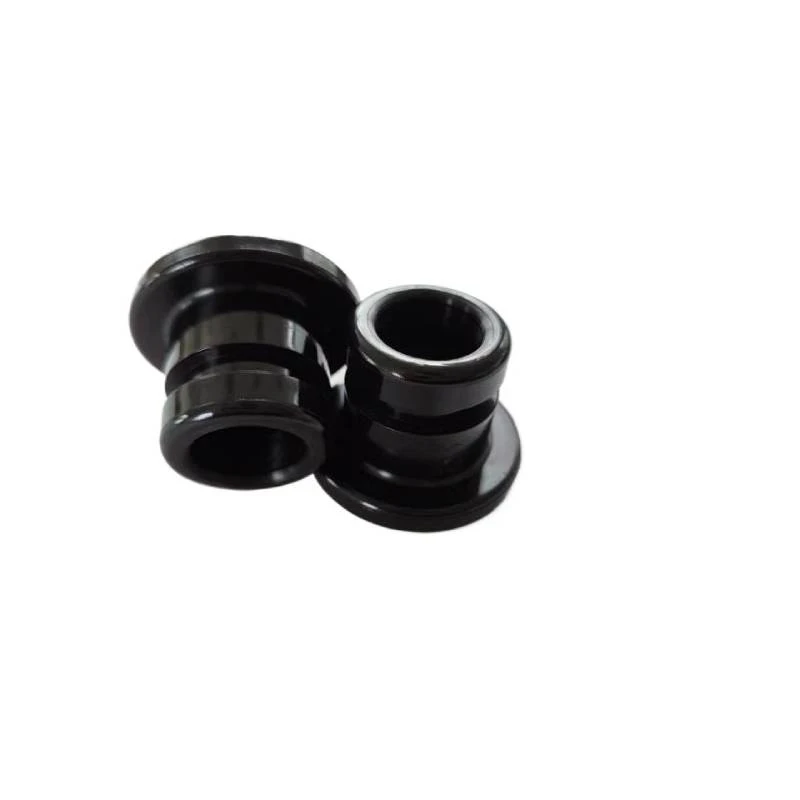
Versatile Plastic Sealing Caps

Air Inlet and Outlet Rubber Tubes

Transparent Rubber Gaskets
Knowledge Center
Expert Guidance on Industrial Sealing Solutions
Answers to common technical and commercial questions regarding custom rubber and plastic parts.
What is the primary difference between standard rubber parts and your custom mixed rubber solutions?
Standard rubber parts are made from generic compounds that may fail under extreme heat or chemical exposure. Our custom mixed rubber solutions are engineered at the molecular level. We adjust the formulation based on your specific environment—such as the high-salinity and heat of Qatar—to ensure the seal maintains its elasticity and does not degrade, significantly extending the component's service life.
How do you ensure that custom parts meet strict international standards like IATF 16949?
We implement a closed-loop quality control system. This begins with raw material verification, followed by in-process monitoring in our 8 production workshops, and concludes with a final audit by our dedicated testing department. By adhering to IATF 16949:2016 and ISO 9001-2015, we guarantee that every part is dimensionally accurate and functionally reliable, with full traceability for every batch produced.
Can you provide rubber and plastic components that are specifically resistant to hydrocarbons for the oil and gas sector?
Yes. We specialize in hydrocarbon-resistant polymers. For oil and gas applications, we utilize specific elastomers and high-grade hdpe fittings that prevent swelling and chemical breakdown when in contact with crude oil or natural gas. These materials are tested for compression set and tensile strength to ensure they maintain a leak-proof seal under high-pressure pipeline conditions.
What is the typical process for requesting a customized part design from your engineering team?
The process starts with a technical requirement review where we analyze your operational environment (temperature, pressure, chemicals). Our engineers then create a tool design and material formulation. After your approval, we produce a prototype for validation. Once the prototype meets your specifications, we move to full-scale production in our workshops, ensuring a seamless transition from concept to finished product.
How do you handle shipping and logistics for large orders destined for Qatar?
Our factory is strategically located near major logistics hubs, including Tianjin port, which facilitates efficient international shipping. We use industry-standard protective packaging to prevent deformation of rubber and plastic parts during transit. We coordinate closely with freight forwarders to ensure timely delivery to Doha and other regional industrial zones, providing all necessary certification paperwork for customs clearance.
Are your products suitable for use in the medical and food-grade industries?
Absolutely. We produce specialized pvc tube fittings and rubber components using non-toxic, biocompatible materials. Our production environment is controlled to prevent contamination, and our adherence to ISO standards ensures that these parts meet the hygiene and safety requirements necessary for medical devices and food processing equipment.
Get Technical Support
Ready to Optimize Your Industrial Sealing Performance in Qatar?
Whether you are managing a petrochemical plant in Ras Laffan or an automotive fleet in Doha, our engineers can help you eliminate leaks and reduce downtime. Contact us today to discuss your specific technical requirements and receive a customized material recommendation for your operational environment.
Discuss Your Requirements


