



Market Insights
The Sealing Components Landscape in Greece
Analyzing the intersection of European regulatory requirements and local industrial demands.
The Greek industrial sector, particularly in the regions surrounding major shipping ports and manufacturing hubs, relies heavily on high-performance rubber and plastic components. The geography of Greece, characterized by extensive coastlines and a strong maritime economy, necessitates sealing solutions that can withstand high humidity and salinity. Consequently, there is a critical demand for materials that prevent corrosion and leakage in marine engineering and coastal infrastructure, moving away from generic parts toward high-specification, engineered components.
Current market trends indicate a significant shift toward specialized materials. As Greek automotive and aviation sectors align more closely with EU-wide sustainability and safety mandates, the demand for precision-molded components has surged. We are seeing a move toward "smart materials" and higher-grade polymers that reduce the frequency of maintenance intervals. The integration of IATF 16949 standards is no longer an advantage but a necessity for suppliers wishing to integrate into the modern European supply chain.
Despite the growth, the market faces constraints in rapid customization. Many local operators struggle to find partners who can provide both the R&D capability for new formulations and the scale of production required for industrial rollout. The opportunity lies in the transition toward specialized, small-to-medium enterprise (SME) agility paired with large-scale quality certifications, allowing for a more responsive supply chain that can adapt to the specific needs of Greek industrial energy and agricultural machinery.
Our Legacy
Evolution of Precision Sealing
From a local workshop to a national high-tech enterprise specializing in complex polymer engineering.
1985
Foundation & Focus
Established with a core focus on the custom processing of rubber and plastic sealing products, laying the groundwork for high-end manufacturing.
Growth Phase
Technical Expansion
Expanded into formulation research and tool design, enabling the company to handle more complex automotive and aviation specifications.
Current
High-Tech Leadership
Recognized as a National High-tech Enterprise and Specialized New Small and Medium Enterprise, operating 8 workshops across 40,000m².
Shift Toward High-End Specialization
The industry has evolved from producing commodity rubber rings to engineering critical sealing components for medical and electronic appliances, requiring a shift toward cleaner production environments and tighter tolerances.
Integration of Automation
The adoption of advanced production technology has replaced manual molding with precision-controlled systems, ensuring that every part is a perfect replica of the original design, reducing waste and increasing reliability.
Regulatory-Driven Design
Environmental and safety certifications (ISO 14001) have moved from being optional to being the primary driver of material selection, pushing the industry toward more sustainable and non-toxic polymer compounds.
Future Outlook
Next-Generation Sealing Trends
Anticipating the technical shifts that will define the next decade of plastic and rubber manufacturing.
Eco-Polymer Transition
A shift toward bio-based elastomers and recyclable thermoplastics to comply with the EU Circular Economy Action Plan, reducing the carbon footprint of industrial seals.
Hybrid Component Fusion
Increasing demand for multi-material parts, where rubber and plastic are fused with metal inserts to create high-strength, leak-proof assemblies for aviation.
Additive Manufacturing
The integration of 3D printing for rapid tooling and low-volume specialized fittings, allowing for geometry that was previously impossible via traditional molding.
Predictive Wear Analysis
Development of polymers with embedded indicators that signal wear and tear, allowing operators to replace seals before failure occurs.
These shifts are primarily driven by the urgent need for operational efficiency and environmental compliance. In the context of Greek infrastructure, the transition to eco-polymers is especially critical for protecting fragile marine ecosystems from potential leakages in industrial pipelines. Furthermore, the convergence of additive manufacturing and traditional molding is allowing for a "just-in-time" supply chain, which significantly reduces the inventory costs for local Greek firms.
Ultimately, the future of the sealing industry lies in the ability to blend high-scale production with extreme customization. As industrial energy systems move toward hydrogen and other new fuels, the requirements for sealing materials will become even more stringent, requiring the kind of specialized mixed rubber research and patented tooling design that define the next generation of industrial manufacturing.
Applied Solutions
Implementation Scenarios in Greece
Real-world applications demonstrating the impact of high-precision custom components.
01
Maritime Engine Sealing for Piraeus Shipping Fleet
Shipping operators in Piraeus require gaskets that resist extreme saline environments and high thermal cycles. By deploying custom mixed rubber seals, operators can prevent lubricant leaks and salt-water ingress, reducing engine downtime and extending the life of critical propulsion components in harsh Aegean conditions.
02
Agricultural Irrigation Networks in Central Macedonia
Large-scale farming operations often face pressure loss due to failing fittings. Replacing generic connectors with precision-engineered hdpe fittings ensures a leak-proof seal under fluctuating water pressures, optimizing water usage and reducing labor costs associated with frequent line repairs.
03
Automotive Component Assembly in Thessaloniki
Assembly plants requiring IATF 16949 compliance need consistent tolerances for rubber-to-metal bonds. Using our specialized metal parts integrated with polymer seals prevents vibration-induced leaks and ensures that exported vehicles meet strict EU safety certifications.
04
Industrial Energy Pipeline Sealing in Attica
Energy infrastructure requires seals that can withstand high-pressure gaseous transport. The implementation of custom-formulated pvc tube fittings designed for chemical resistance ensures the integrity of the transport network, mitigating the risk of environmental contamination.
05
Medical Device Gasket Production for Athens Healthcare
Medical equipment manufacturers require non-toxic, biocompatible sealing solutions. By leveraging our specialized production workshops, these firms can secure seals that meet stringent hygiene standards, ensuring the reliability of critical life-support and diagnostic machinery.
Proven Impact
Representative Deployment Outcomes
Illustrative scenarios based on typical industrial requirements and technical resolutions.
In maritime applications, the transition to high-grade custom rubber seals significantly reduces the frequency of unplanned maintenance. By addressing the specific salinity and temperature profiles of the Mediterranean, the operational lifespan of propulsion gaskets is markedly improved, ensuring higher vessel availability.
For automotive supply chains, the critical factor is the certification of the supplier. Implementing components from a partner with IATF 16949 certification eliminates regulatory friction during audits and ensures that every rubber and plastic part meets the exact dimensional specifications required for assembly.
Infrastructure projects involving large-scale HDPE fittings benefit most from bespoke tool design. When standard parts fail to meet the specific geometry of a bridge or railway project, custom-engineered fittings prevent the costly delays associated with on-site modifications and subsequent leakage.
Our Journey
Legacy of Engineering Precision
Decades of dedication to the art and science of industrial sealing.
1985
Company Establishment
Founded with a mission to lead in the production of rubber and plastic parts, focusing on custom processing for middle to high-end sealing products.
Expansion Phase
R&D and Tooling Integration
Integrated formulation research for mixed rubber and the design of specialized production tools to meet complex automotive and aviation needs.
Modern Era
High-Tech Certification
Attained "National High-tech Enterprise" status and "Hebei Province Specialized" certification, expanding to 40,000 square meters with 8 specialized workshops.
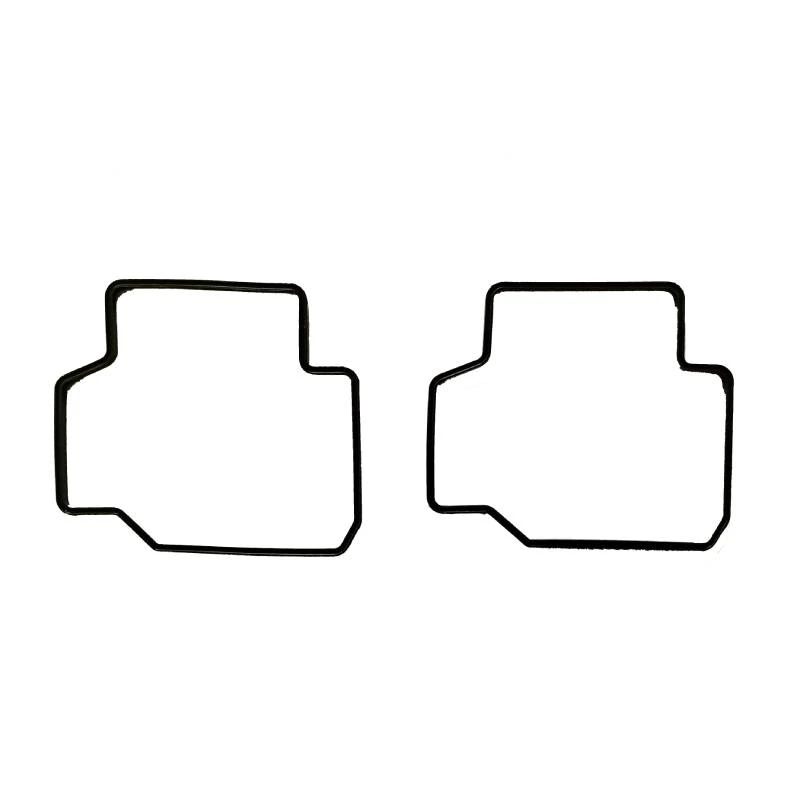
waterproof rubber ring

Rubber Wheel for Mechanical Equipment
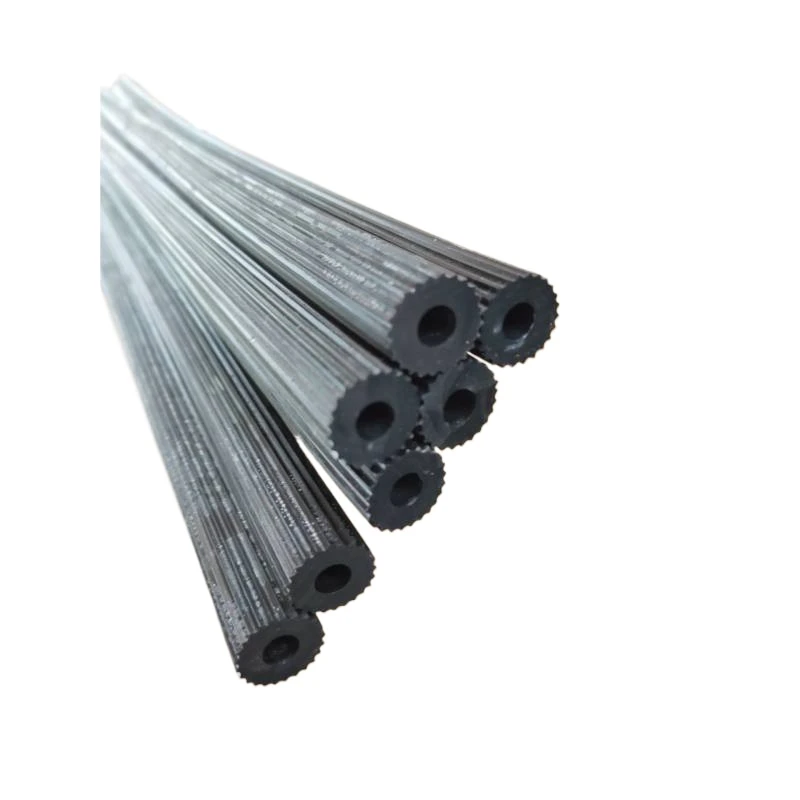
Extruded Rubber Rods

Custom-Made Mechanical Seals
Technical Support
Common Industrial Sealing Questions
Expert answers to help you select the right materials and components for your application.
What differentiates custom mixed rubber from standard industrial rubber parts?
Custom mixed rubber is engineered for specific environmental stressors. While standard rubber may degrade under extreme heat or UV exposure, mixed formulations are tailored for chemical resistance, tensile strength, and temperature stability. This is crucial for applications in the automotive and aviation sectors where failure is not an option. We conduct specific formulation research to match the rubber's properties to the operational conditions of the end-use environment.
How do IATF 16949 certifications impact the quality of plastic and rubber parts?
IATF 16949 is the global automotive quality management standard. It mandates a rigorous approach to defect prevention and reduction of variation and waste in the supply chain. For the user, this means every part produced follows a strictly audited process, ensuring that the thousandth part is identical to the first. This certification is essential for Greek manufacturers exporting to EU automotive OEMs who require absolute consistency in sealing components.
Can you provide HDPE fittings for high-pressure industrial applications in Greece?
Yes, we specialize in high-precision HDPE fittings designed for durability and pressure resistance. Our process involves custom tool design and advanced production technology to ensure a perfect fit and seal. Depending on the application—whether it's agricultural irrigation or industrial energy transport—we can adjust the wall thickness and material density to meet the specific pressure requirements of the Greek infrastructure project.
What is the typical process for ordering customized PVC pipe parts?
The process begins with a technical review of your specifications or blueprints. Our R&D team then designs the necessary production tools and selects the appropriate polymer compound. After a prototype is produced and verified for dimensional accuracy and material performance, we move into full-scale production across our 8 workshops. Finally, every batch undergoes strict quality control in our testing department before shipment to ensure it meets your exact requirements.
How do you ensure the longevity of rubber parts in coastal Mediterranean climates?
Longevity in coastal climates requires resistance to ozone, UV radiation, and salt-water corrosion. We utilize specific mixed rubber formulations that incorporate antioxidants and UV stabilizers into the polymer matrix. This prevents the rubber from cracking or becoming brittle over time. We recommend testing the components against the specific chemical profile of the local environment to ensure the chosen material offers the maximum possible operational lifespan.
What are the first steps to initiate a custom sealing project with your company?
The first step is to provide detailed technical drawings or a physical sample of the part you need. Along with the geometry, it is important to specify the operational environment, including temperature ranges, pressure levels, and any chemicals the part will encounter. Our team will then perform a feasibility analysis and provide a proposal including material recommendations and a production timeline. You can initiate this by visiting our contact page.
Ready to Optimize
Secure Your Industrial Infrastructure with Precision Sealing
Whether you are managing a shipping fleet in Piraeus or an automotive plant in Thessaloniki, our certified custom rubber and plastic solutions ensure zero-leakage performance. Partner with a national high-tech enterprise to reduce your maintenance costs and meet strict EU compliance standards across Greece.
Discuss Your Requirements


