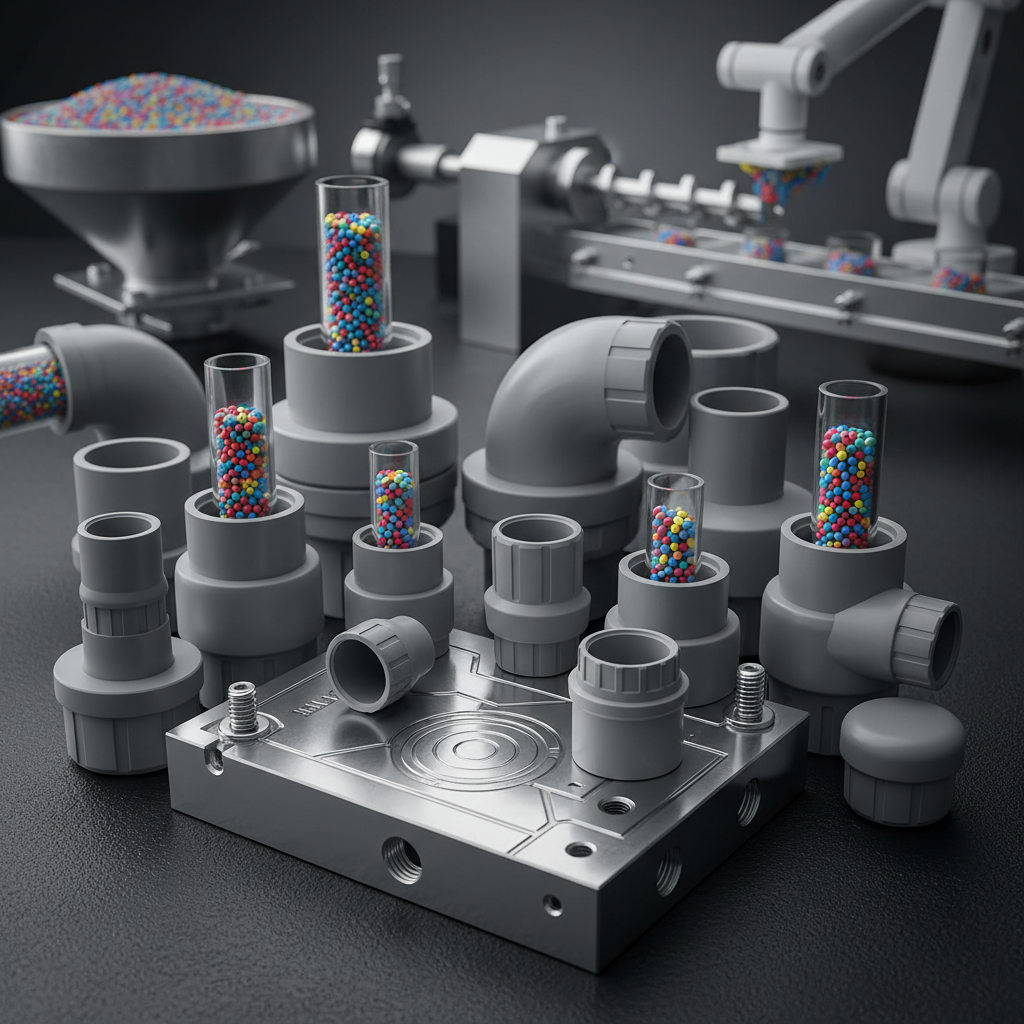
The global demand for precision industrial components has shifted toward integrated manufacturing hubs that can bridge the gap between diverse material requirements. In the current industrial landscape, finding a reliable metal parts factory often involves navigating a complex web of technical specifications and supply chain constraints.
This challenge is particularly acute in sectors where metal components must interface with elastomers or polymers, such as in automotive seals or aerospace insulators. The technical difficulty lies in achieving tight dimensional tolerances while ensuring material compatibility between disparate fabrication processes.
This analysis examines the critical engineering considerations when sourcing custom industrial parts, evaluating the intersection of metallurgy and polymer science, and providing a framework for buyers to optimize their selection process for a high-performance metal parts factory.


The synergy between metal and non-metal components is a cornerstone of modern industrial design. When a metal parts factory collaborates with rubber or plastic specialists, the primary engineering focus is the bonding interface.
Surface preparation, including chemical etching and mechanical abrasion, ensures that the metal substrate provides adequate adhesion for over-molded rubber components. This is critical for preventing delamination under high-pressure or thermal cycling conditions.
Precision in industrial fabrication is not merely about the smallest number, but about the consistency of tolerances across high-volume production. For metal components, this involves strict adherence to GD&T (Geometric Dimensioning and Tolerancing) standards to ensure seamless assembly with mating parts.
The impact of these tolerances is most evident in sealing applications. A deviation of a few microns in a metal housing can lead to failure in the corresponding rubber seal, resulting in leakage or premature wear. This necessitates a closed-loop quality control system that monitors tool wear in real-time.
Beyond dimensions, surface roughness (Ra) plays a pivotal role. Too smooth a surface may hinder adhesive bonding, while excessive roughness can create stress concentrators that lead to fatigue failure in high-cycle applications.
Choosing the right fabrication method involves balancing initial tooling costs against long-term unit costs and required precision. Common methods like CNC machining and stamping offer different advantages depending on the complexity of the geometry.
Furthermore, post-processing treatments such as anodizing, galvanizing, or powder coating are not just aesthetic choices. They are critical for protecting the substrate from corrosion, especially when the part is exposed to harsh chemicals or saline environments.
Reliability in industrial components is measured by the ability to maintain functional specifications under extreme operational stress. This requires a rigorous testing framework that simulates real-world environmental pressures, including thermal expansion and chemical exposure.
Engineering teams utilize normalized assessment scores to compare different material configurations. By evaluating factors such as tensile strength, fatigue limit, and corrosion resistance, manufacturers can determine the optimal balance for a specific application.
In representative engineering scenarios, such as automotive powertrain systems, metal components must operate in environments characterized by high vibration and fluctuating temperatures. The integration of precise metal housings with high-grade EPDM or Nitrile rubber seals ensures the system's integrity against oil and fuel leakage.
Similarly, in the aerospace sector, components must maintain structural stability at extreme altitudes. This requires a metal parts factory capable of working with specialty alloys that exhibit low thermal expansion coefficients, paired with silicone-based insulators for high-temperature resistance.
The industry is moving toward "Smart Fabrication," where additive manufacturing (3D printing) is used to create complex internal geometries in metal that were previously impossible. These components can then be integrated with custom rubber formulations to create lightweight, high-strength hybrid parts.
Another emerging trend is the use of bio-based polymers in combination with recycled metal substrates. This shift is driven by global regulatory pressures to reduce the carbon footprint of industrial manufacturing without sacrificing performance.
Furthermore, the integration of embedded sensors within the metal-rubber interface is becoming a reality. This allows for real-time monitoring of seal wear and structural health, shifting maintenance from a scheduled basis to a predictive, data-driven model.
Selecting the appropriate configuration depends on the specific operating environment and the expected lifecycle of the part. A basic configuration may suffice for low-stress applications, but precision and high-duty profiles are essential for critical infrastructure.
Engineering teams should evaluate the trade-off between initial procurement cost and the total cost of ownership (TCO), which includes maintenance intervals and failure risks.
The following matrix provides a comparative framework for different configuration profiles typically offered by a professional metal parts factory.
| Configuration Type | Precision Level | Durability Rating | Recommended Use Case |
|---|---|---|---|
| Basic Profile | Standard (±0.1mm) | Medium | General Industrial Housing |
| Standard Profile | High (±0.05mm) | High | Automotive Sealing Systems |
| High-Duty Profile | High (±0.05mm) | Extreme | Heavy Machinery / Mining |
| Precision Profile | Ultra (±0.01mm) | High | Aerospace / Medical Devices |
| Automated Profile | Consistent (±0.05mm) | High | High-Volume Consumer Electronics |
| Industry Baseline | Standard (±0.1mm) | Medium | Generic Hardware Components |
Tolerances are managed through a combination of statistical process control (SPC) and automated inspection. By utilizing CMM (Coordinate Measuring Machines), a factory can identify trends in tool wear and apply offsets before parts drift out of specification. This ensures that every unit in a million-piece run remains within the defined GD&T limits.
The most effective method is a combination of mechanical interlocking and chemical priming. Mechanical interlocking involves creating textures or grooves on the metal surface. Chemical priming utilizes specific adhesives that react with both the metal oxide layer and the rubber polymer during the vulcanization process, creating a covalent bond.
For temperatures exceeding 200°C, silicone rubber is typically preferred due to its thermal stability. However, if the environment also involves exposure to oils or fuels, fluorocarbon (FKM) is the industry standard. The choice depends on the specific temperature-chemical trade-off required for the application.
Failure analysis typically begins with a cross-sectional examination of the interface. If the failure is adhesive (clean separation), it indicates poor surface preparation. If it is cohesive (rubber tearing), it suggests the material formulation was insufficient for the operational stress. Checking for chemical degradation or thermal hardening is also essential.
The primary challenge is aligning the CAD models of the metal part with the shrinkage rates of the over-molded polymer. Rubber shrinks during cooling, which can induce internal stresses on the metal substrate. Engineers must compensate for this "mold shrink" during the design phase to ensure final dimensions are accurate.
Evaluation should focus on three pillars: Certification (ISO/IATF), Capability (equipment list and precision limits), and Quality Systems (sampling plans and traceability). Requesting a First Article Inspection (FAI) report is the best way to verify if the factory can translate a theoretical design into a tangible, high-precision component.
The optimization of industrial components requires a holistic understanding of the relationship between material science and precision fabrication. By shifting from simple sourcing to strategic engineering partnerships, companies can reduce failure rates and improve overall system reliability.
Ultimately, the success of a high-performance assembly depends on the precision of the metal parts factory and its ability to integrate seamless interfaces with polymer components, ensuring durability in the most demanding environments.