


Market Analysis
The Industrial Sealing Landscape in Slovakia
Analyzing the intersection of automotive excellence and polymer engineering in Central Europe.
Slovakia has emerged as a global hub for automotive and machinery manufacturing, creating an immense demand for high-precision polymer components. The local industrial environment is characterized by a rigorous focus on efficiency and lean production. Consequently, there is a critical need for rubber and plastic parts that can withstand high-pressure environments and maintain sealing integrity over extended operational cycles. The market is shifting away from generic off-the-shelf components toward specialized, engineered solutions that reduce maintenance frequency and prevent costly production halts.
Technological drivers in the region are currently centered on material innovation and sustainability. There is a growing preference for high-performance HDPE and PVC materials that offer a balance of durability and environmental compliance. Furthermore, the integration of automated assembly lines in Slovakian factories requires parts with extremely tight tolerances to ensure seamless compatibility. This trend is pushing manufacturers to adopt advanced mold technology and real-time quality monitoring to eliminate defects before they reach the assembly stage.
The outlook for the Slovakian market remains positive, though constraints exist regarding the availability of highly specialized custom compounds. Opportunities lie in the development of "smart" sealing systems and components that can operate in increasingly extreme conditions, such as those found in EV battery cooling systems or aerospace hydraulics. Companies that can provide a complete cycle of R&D, prototyping, and mass production—while maintaining international certifications—will hold a significant competitive advantage in this evolving landscape.
Our Heritage
Decades of Engineering Evolution
From a specialized workshop to a national high-tech enterprise.
1985
Foundation Phase
Established a dedicated focus on custom processing of rubber and plastic sealing products, laying the groundwork for middle-to-high-end specialized production.
Expansion Era
Technical Integration
Expanded capabilities into mixed rubber formulation R&D and specialized tool design, allowing for complete control over the production lifecycle.
Modern Phase
High-Tech Recognition
Achieved "National High-tech Enterprise" status and certification in IATF 16949, specializing in aerospace and automotive grade components.
Material Specialization
The transition from general-purpose polymers to specialized, high-performance elastomers has allowed for the creation of parts that survive in vacuum and high-pressure environments, essential for aviation and energy sectors.
Certification-Driven Growth
By adopting strict ISO and IATF standards, the focus shifted from mere production to quality assurance, ensuring that components are interchangeable and reliable on a global scale.
Scale and Precision
The expansion to 40,000 square meters and 8 specialized workshops has enabled the simultaneous handling of massive OEM orders without compromising the precision of custom small-batch prototypes.
Future Outlook
Trends Shaping the Future of Polymer Sealing
Anticipating the next wave of industrial requirements for rubber and plastic components.
Smart Material Integration
The industry is moving toward "active" polymers that can signal wear and tear through chemical or physical changes, reducing the need for scheduled teardowns.
Eco-Friendly Elastomers
Increasing EU regulations are driving the adoption of bio-based and recyclable polymers that maintain the high mechanical properties of traditional plastics.
Additive Manufacturing
3D printing of high-performance rubber parts for rapid prototyping is shortening the development cycle for customized Slovakian industrial machinery.
Zero-Tolerance Quality
The transition toward fully automated AI-driven inspection is ensuring that every single part is perfectly compliant with the most stringent aerospace standards.
The shift toward electrification in the automotive sector is creating new requirements for thermal management. Components now need to handle different chemical profiles, such as those found in specialized battery coolants, necessitating the development of new mixed rubber compounds that can maintain elasticity at cryogenic temperatures while resisting high-voltage electrical arcs.
Furthermore, the globalization of the supply chain is placing a premium on partners who can offer a "one-stop-shop" for metal, plastic, and rubber components. By integrating these materials into a single production ecosystem, manufacturers can ensure that the interface between different materials—such as a rubber seal on a metal flange—is optimized for the long term, reducing the risk of galvanic corrosion and leakages.
Practical Application
Deployment Scenarios in Slovakian Industry
Real-world applications of our custom sealing and fitting solutions.
01
Automotive Assembly Line Fluid Systems
In a high-volume automotive plant in Slovakia, standard seals were failing due to the chemical composition of new synthetic lubricants. We implemented customized rubber parts with a tailored mixed rubber compound. This solved the swelling issue, extending the mean time between failures (MTBF) and reducing assembly line downtime.
02
Agricultural Machinery Hydraulic Seals
Heavy machinery operating in rural Slovakian terrains is subject to extreme dust and moisture. By designing reinforced metal parts combined with high-durability rubber gaskets, we ensured that hydraulic systems remained leak-free even under high vibrational stress and contaminated environments.
03
Industrial Water Treatment HDPE Networks
For a municipal water infrastructure project, generic fittings were causing slow leaks at connection points. We provided precision-molded hdpe fittings with enhanced wall thickness and tighter tolerances. This ensured a permanent, leak-proof seal, reducing water loss and lowering long-term maintenance costs.
04
Food Processing Grade Tubing Systems
In Slovakian food production facilities, hygiene is paramount. We developed non-toxic, FDA-compliant pvc tube fittings that resist biofilm accumulation. These parts were engineered to withstand frequent high-temperature steam sterilization cycles without degrading or leaching chemicals.
05
Railway Bridge Expansion Joint Seals
Railway infrastructure in Slovakia must handle drastic seasonal temperature shifts. We supplied heavy-duty pvc pipe parts and rubber expansion seals designed for high elastic recovery. This prevented water ingress into the bridge structure, protecting the concrete from freeze-thaw damage.
Industry Perspectives
Representative Deployment Contexts
Typical outcomes and operator feedback from our industrial applications.
The transition to custom-formulated rubber seals significantly reduced our unplanned maintenance. The ability to match the exact chemical profile of our lubricants ensured that the parts didn't degrade, which was a persistent problem with standard suppliers.
Sourcing HDPE fittings with such tight tolerances has eliminated the need for secondary sealants in our piping networks. The precision molding ensures a perfect fit every time, which has accelerated our installation timelines.
The combination of IATF 16949 certification and the ability to prototype quickly was key for our aerospace project. Having a partner who understands both the technical requirements and the regulatory standards is invaluable.
About Us
GaoBeiDianShi Fengye Rubber Seals
A legacy of precision, quality, and innovative polymer engineering since 1985.
1985
Company Establishment
Founded with a core focus on the custom processing of middle to high-end rubber and plastic sealing products, establishing a reputation for reliability in specialized components.
Growth Phase
Technical Expansion
Developed advanced capabilities in mixed rubber formulation research and integrated tool design, enabling the company to provide end-to-end solutions from R&D to mass production.
Modern Era
Certification & Innovation
Achieved the title of "National High-tech Enterprise" and obtained IATF 16949:2016, ISO 9001-2015, and ISO 14001 certifications, expanding into aviation and medical fields.
Present
Industrial Leadership
Now operating a 40,000+ square meter facility with 8 specialized workshops and 120 employees, serving critical sectors like automotive, aerospace, and electronic appliances.

O ring
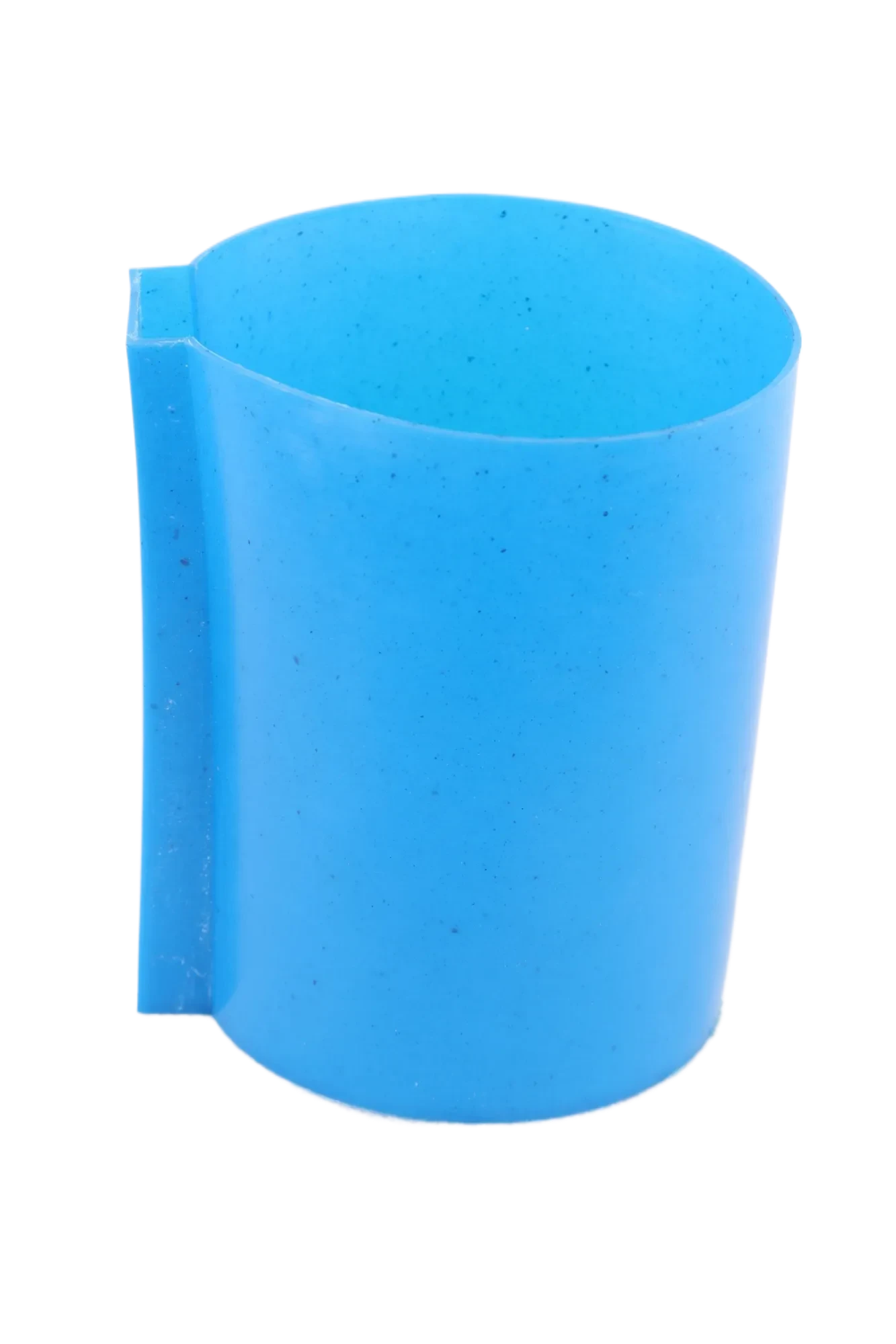
Introducing plastic tube covers: the ultimate solution for protection and sustainability

Rubber Sleeve with Iron Components

Bellows Seal: A Solution for Strong Sealing and Versatile Applications
Knowledge Center
Frequently Asked Questions
Technical guidance and procurement information for industrial sealing solutions.
What is the primary difference between standard and customized rubber seals for industrial use?
Standard seals are produced from general-purpose compounds and generic sizes, which often fail when exposed to specific industrial chemicals or extreme temperatures. Customized seals are engineered based on the specific application environment. This involves formulating a unique mixed rubber compound to resist particular corrosive agents and designing the part to exact OEM dimensions, ensuring a perfect fit and significantly longer operational life.
How do I evaluate the cost-effectiveness of switching to high-precision HDPE fittings?
Cost-effectiveness should be measured by Total Cost of Ownership (TCO) rather than initial unit price. High-precision fittings reduce the need for secondary sealants, decrease installation time, and drastically lower the rate of leak-related failures. In a typical industrial setting, the reduction in unplanned downtime and the extension of the maintenance cycle usually offset the higher initial investment within the first year of operation.
Can your PVC pipe parts meet the strict environmental and health regulations in Slovakia?
Yes. We adhere to strict ISO 14001 environmental standards and utilize materials that comply with EU regulations. For applications in the food or medical sectors, we provide certified non-toxic polymers that are resistant to leaching and compatible with sterilization processes. All materials used are documented with technical data sheets to ensure full traceability and regulatory compliance for our European clients.
What technical documentation is provided to ensure the quality of customized metal and plastic parts?
Every customized order is accompanied by comprehensive quality documentation. This includes material certificates (proving compound composition), dimensional inspection reports from our dedicated testing department, and certification of compliance with IATF 16949 or ISO 9001 standards. If required, we also collaborate with independent third-party testing bodies to verify that the parts meet the user's exact specifications and performance benchmarks.
What is the typical process for developing a new customized seal from a technical drawing?
The process begins with a technical review of your drawings and operational requirements (temperature, pressure, chemicals). We then perform material selection and formulation R&D. Once the compound is finalized, our engineering team designs the production tools. A prototype is produced and tested for dimensional accuracy and performance. After client approval, we move to full-scale production in our specialized workshops, maintaining strict quality control at every stage.
How should I choose between PVC and HDPE fittings for my specific application?
The choice depends on the primary stress factor. PVC is typically preferred for applications requiring high stiffness, chemical resistance to acids, and ease of installation in indoor plumbing or laboratory settings. HDPE is superior for outdoor or underground applications due to its higher impact resistance, flexibility, and ability to withstand extreme temperature fluctuations without cracking. We recommend providing your operational environment details so our engineers can suggest the most durable material.
Expert Consultation
Ready to Optimize Your Industrial Sealing Performance?
Whether you are upgrading automotive assembly lines or managing critical infrastructure in Slovakia, our team is ready to provide precision-engineered solutions. Discuss your specific technical requirements with our experts to ensure your systems achieve zero-leak performance and maximum operational longevity.
Discuss Your Requirements


