

Top HDPE Corrugated Pipe Manufacturers for Industrial Solutions
When managing industrial fluid transport or protecting critical wiring in harsh environments, the integrity of the conduit system is paramount. High-density polyethylene (HDPE) solutions provide the necessary durability and flexibility to withstand extreme mechanical stress and chemical exposure. For procurement managers and engineers, selecting the right HDPE corrugated pipe manufacturers involves more than just comparing prices; it requires an evaluation of material purity, wall consistency, and the ability to customize specifications for specific industrial challenges.
From automotive cable protection to large-scale sewage treatment, corrugated structures offer a unique balance of high crush resistance and lightweight handling. By integrating advanced polymer engineering with precise molding techniques, these components ensure long-term operational reliability while minimizing maintenance downtime. This guide explores the technical advantages and application-specific considerations essential for sourcing high-performance plastic conduits.

Engineering Excellence in HDPE Corrugated Structures and Material Performance
The effectiveness of a corrugated pipe lies in its geometry. The alternating ridges and valleys create a structural reinforcement that allows the pipe to withstand significant external pressure without collapsing, a feature critical for underground installations. High-density polyethylene is chosen as the primary material due to its exceptional strength-to-density ratio and inherent resistance to corrosion, making it superior to traditional metal piping in acidic or alkaline environments.
Beyond basic durability, these components are engineered for environmental stability. Advanced HDPE formulations prevent the material from becoming brittle in freezing temperatures or softening under moderate heat. This stability is essential for industries such as aviation and railway bridge construction, where structural components are exposed to fluctuating weather conditions and intense vibration.
- High Impact Resistance: Ability to absorb mechanical shocks without cracking.
- Chemical Inertness: Resistance to solvents, salts, and industrial acids.
- Flexibility: Ease of installation in complex layouts without the need for excessive fittings.
- Longevity: Resistance to UV degradation and biological growth.

Critical Industrial Applications: From Automotive Systems to Medical Devices
The versatility of HDPE corrugated products allows them to serve a vast array of sectors. In the automotive industry, these pipes are indispensable for routing electrical harnesses and fluid lines, where they must reduce noise, vibration, and harshness (NVH) while protecting cables from abrasion. The corrugated design not only provides a protective shell but also helps in dampening mechanical oscillations, enhancing the overall passenger experience.
In more specialized fields, such as medical and food processing, the focus shifts toward hygiene and safety. Medical-grade plastics ensure that conduits used in diagnostic equipment are non-toxic and resistant to sterilization chemicals. Similarly, in food manufacturing, the use of food-safe HDPE prevents contamination, ensuring that the infrastructure meets stringent health regulations while maintaining a secure, leak-proof seal in processing lines.
Furthermore, these components play a vital role in environmental protection. When utilized in industrial sewage treatment or exhaust gas emission systems, they prevent hazardous leaks from entering the ecosystem. The ability to customize diameters and wall thicknesses allows engineers to tailor the solution to the specific flow rate and pressure requirements of the facility.
Strategic Procurement: Evaluating Supplier Capabilities and Quality Standards
Sourcing from experienced manufacturers requires a deep dive into their quality management systems. A reliable supplier should not only possess the machinery for large-scale production but also the R&D capability to modify material formulations based on the end-use environment. For instance, a pipe destined for an offshore oil rig requires different UV stabilizers and impact modifiers than one used for indoor electronic appliances.
Quality assurance should be verified through recognized certifications such as ISO 9001 or IATF 16949. These standards ensure that the production process—from raw resin inspection to final pressure testing—is documented and repeatable. Buyers should look for suppliers that offer a dedicated testing department capable of performing independent third-party audits, ensuring that the delivered product exceeds the specified tolerances.
Customization is another key differentiator. The ability to provide tailored molds, specific lengths, and integrated sealing rings can significantly reduce the assembly time for the end-user. When evaluating potential partners, ask about their experience with "specialized, small, and medium-sized" innovation, as this often indicates a capacity for solving complex, non-standard engineering problems.
Comparison of Material Performance Across Application Scenarios
| Application Field | Key Requirement | Recommended Material Grade | Critical Performance Metric |
|---|---|---|---|
| Automotive/Aviation | Vibration Dampening | High-Impact HDPE | Flex Fatigue Life |
| Medical/Food Grade | Non-Toxicity | FDA-Compliant Plastic | Chemical Leaching Rate |
| Industrial Sewage | Corrosion Resistance | Chemical-Grade HDPE | Wall Thickness Uniformity |
| Electronics/Appliances | Flame Retardancy | UL-Rated HDPE | Thermal Deformation Point |
| Infrastructure/Bridges | Crush Strength | Heavy-Duty HDPE | Ring Stiffness (SN) |
Technical Challenges in Installation and Long-term Maintenance
Despite the robustness of HDPE, improper installation can lead to premature failure. One of the most common issues is "ovality," where the pipe loses its circular cross-section due to uneven soil loading or excessive bending during placement. To mitigate this, engineers must ensure correct bedding and backfilling procedures, utilizing granular materials that distribute the load evenly across the corrugated ridges.
Thermal expansion is another critical factor. HDPE has a higher coefficient of thermal expansion than steel or concrete. In long runs of piping, especially those exposed to sunlight or high-temperature fluids, "snaking" or expansion loops must be incorporated into the design to prevent the pipe from buckling or pulling out of its fittings. Failure to account for these movements often results in joint leaks and structural stress.
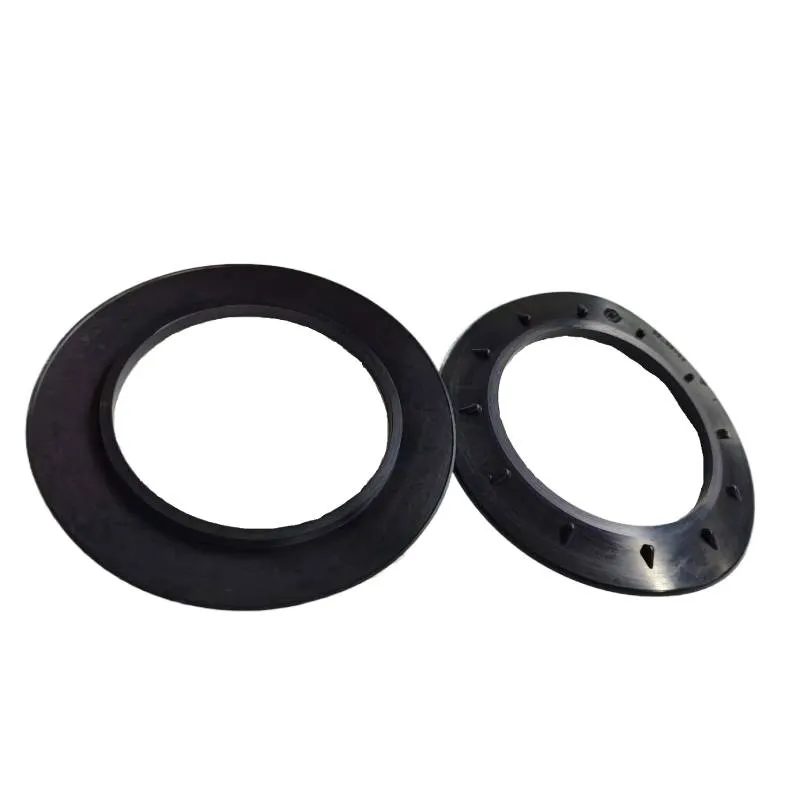
Regular maintenance involves monitoring for mechanical abrasions or chemical degradation at the joints. Utilizing high-quality rubber seals and precision-engineered couplings can significantly extend the service life of the system. By combining the rigid strength of the corrugated pipe with the flexible sealing of professional rubber gaskets, operators can achieve a virtually leak-proof industrial conduit system.
Future Trends in Polymer Conduit Technology and Sustainability
The industry is moving toward "Circular Economy" models, where the focus is on the recyclability of HDPE. Modern manufacturing is increasingly incorporating post-consumer recycled (PCR) resins without compromising the structural integrity of the pipe. This shift not only reduces the carbon footprint of infrastructure projects but also lowers raw material costs for the end-user.
Technologically, we are seeing the integration of "Smart Piping." This involves embedding sensors within the corrugated wall to monitor pressure changes, leak detection, and structural deformation in real-time. Such innovations allow for predictive maintenance, moving away from scheduled inspections to a data-driven approach that identifies failures before they occur.
Additionally, the development of multi-layer co-extrusion is allowing for pipes that combine the strengths of different polymers. For example, a pipe might feature a high-density outer shell for crush resistance and a smooth, low-friction inner liner to optimize flow rates. As these materials evolve, the boundaries of where HDPE can be applied continue to expand, offering more efficient and sustainable alternatives to traditional piping.
Common Technical Inquiries Regarding HDPE Corrugated Solutions
What is the primary advantage of corrugated HDPE over smooth-wall piping?
The primary advantage is the significantly higher ring stiffness and crush resistance. The corrugations act as structural ribs, allowing the pipe to support heavier external loads while using less material, which reduces overall weight and transportation costs.
How do you ensure the sealing integrity at the joints of corrugated pipes?
Integrity is maintained through the use of precision-engineered rubber sealing rings and coupling adapters. These seals are designed to compress under pressure, creating a watertight barrier that accommodates the thermal expansion and contraction of the HDPE material.
Can these pipes be used for transporting high-temperature fluids?
HDPE is suitable for moderate temperatures, but its strength decreases as temperature increases. For high-temperature applications, specialized heat-stabilized resins or reinforced composite materials are recommended to prevent deformation.
What certifications should I look for when choosing a manufacturer?
Look for ISO 9001 for general quality management and IATF 16949 if the product is for the automotive sector. Additionally, check for material certifications such as FDA compliance for food/medical use or UL ratings for electrical safety.
How does UV exposure affect the longevity of HDPE pipes?
Unprotected HDPE can degrade under prolonged UV exposure. However, professional manufacturers add carbon black or other UV stabilizers during the extrusion process, which prevents the plastic from becoming brittle and extends its outdoor service life for decades.
Is it possible to customize the corrugation pitch and depth?
Yes, customization is possible through the use of tailored molds. The pitch (distance between ridges) and depth are adjusted based on the required balance between flexibility and compressive strength for the specific application.
Technical Resources and Industry Standards
- ASTM International - Standards for Plastic Piping
- ISO - Quality Management Systems for Manufacturing
- Plastics Industry Association - Material Guidelines
- Industrial Piping Design and Installation Standards
Selecting the ideal conduit system requires a synergy between material science and application engineering. Whether your project demands extreme chemical resistance, vibration dampening, or high structural load capacity, prioritizing verified quality standards and customization capabilities ensures long-term operational success. For tailored HDPE solutions, consult with engineers who understand the nuances of polymer performance.
Related Industrial Insights